How to Build a Supplier Onboarding Process Before the First Purchase Order
Build a supplier onboarding process that checks capabilities, confirms requirements, assigns owners, and tests readiness before the first purchase order.
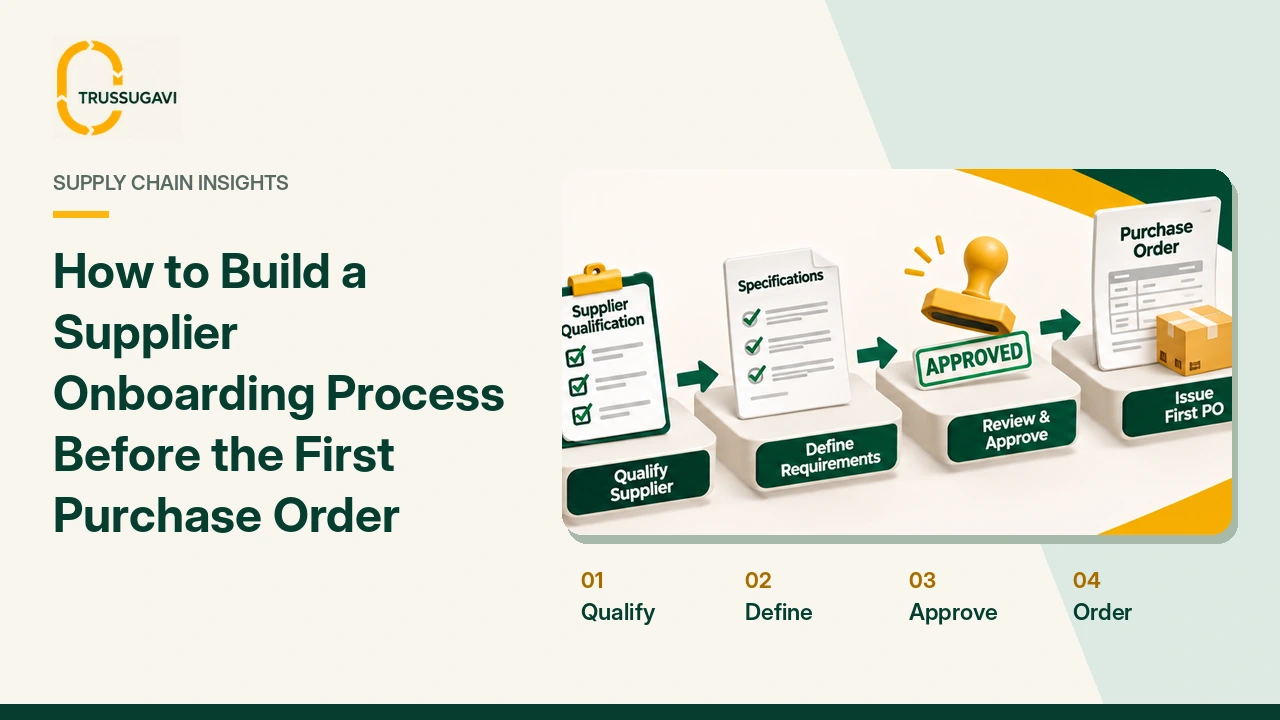
The quote looks good. Purchasing creates a new vendor, places the order, and moves on. Two weeks later, receiving cannot identify the shipment, the invoice uses different payment terms, and production discovers the material arrived without a required document.
None of those problems began at the loading dock. They began when the business treated supplier setup as a data-entry task. A supplier onboarding process should establish whether a new partner can deliver what your operation needs and whether both sides understand how the relationship will work.
Decide what must be checked for this supplier
Start with the purchase and its consequences. A supplier providing a readily available office item does not need the same review as a company making a part that can stop your production line. Match the depth of onboarding to the dependency you are creating.
Consider product specifications, replacement options, delivery lead time, access to information, and the effect of a failure. Ask whether another supplier could cover the requirement while a problem is resolved. Record why the supplier needs a light, standard, or more detailed review.
This early decision prevents two familiar mistakes: asking every vendor to complete an oversized questionnaire and approving a critical supplier with only a price quote. Give the review an owner before collecting documents.
Define the requirement in usable detail
A supplier cannot reliably meet a requirement that different departments describe differently. Bring purchasing, operations, quality, and receiving together long enough to agree on what must arrive and how acceptance will work.
Confirm the item description, drawing or specification version, unit of measure, packaging, labeling, quantity, and delivery location. Include any required certificates, inspection records, or handling instructions. Make clear which requirements are mandatory and which are preferences.
Use an example where possible. A sample label or completed shipment document can remove uncertainty that a paragraph of instructions leaves behind. Keep one controlled version of the requirements so an old attachment does not become the supplier's working reference.
Verify capability beyond the sales conversation
Ask how the supplier will meet your expected volume and lead time. Understand where the work happens, which activities are subcontracted, and whether capacity depends on equipment or people already committed elsewhere.
Evidence can include a sample, a trial order, references relevant to the work, or a structured review of the production process. For critical purchases, a site visit may be useful. Choose evidence that addresses the actual risk rather than collecting documents nobody evaluates.
Where a qualification or certification is required, check that it covers the correct entity, site, product, and validity period. A logo on a proposal is not enough. Record who reviewed the evidence and what questions remain open.
Agree how orders and changes will move
Confirm who receives purchase orders and how quickly the supplier should acknowledge them. An order sitting in a shared mailbox can look accepted internally even when nobody at the supplier has scheduled it.
Define how due dates are confirmed, how shortages are reported, and who can approve substitutions. Decide what happens when your own team changes quantity or specification after release. Both sides need a clear change record rather than separate email threads with conflicting instructions.
For growing manufacturers and distributors, our supply chain strategy services help connect supplier decisions with planning, inventory, and delivery requirements. Onboarding should support those daily decisions from the beginning.
Complete financial and system setup carefully
Create the supplier record using verified business details. Align the vendor name, ordering address, billing information, currency, and agreed payment terms. Confirm the required tax and payment documentation with the responsible finance team.
Verify bank details through an established contact using a separate trusted channel. Apply the same discipline to later changes. A request that appears in a familiar email thread should still follow the company's verification process.
Check that purchasing and finance use the same record. Duplicate vendor profiles can split order history, confuse payments, and make performance harder to review. Limit permissions for creating or changing supplier information and retain an approval trail.
Test the complete first-order route
Before releasing a large commitment, walk through a small order where practical. Confirm that the supplier receives the purchase order, acknowledges the specification, provides shipment information, and sends the invoice to the correct destination.
Have receiving check the actual arrival against the agreed requirements. Did the label make sense? Were documents accessible? Could the team match the shipment to the order without calling three departments? Record what worked and what required a workaround.
If the first delivery reveals a problem, close it before repeating the same order at greater volume. A successful sample product does not automatically prove that packaging, delivery communication, and invoicing are ready.
Set an approval gate and a review date
Use a short readiness record with an owner and completion evidence for each required check. Separate approved, conditionally approved, and not approved suppliers. If approval includes a condition, state its scope and deadline.
For example, a supplier might be approved for a limited trial quantity while a packaging issue is corrected. That condition should be visible to purchasing. Otherwise, a different buyer may place a full order assuming the review is complete.
Schedule a review after the first few deliveries. Compare what was promised with what occurred and discuss recurring problems with the supplier. Update the onboarding requirements when the same missing information causes trouble across several new vendors.
Keep the process small enough to use
One checklist can coordinate the work without becoming a filing exercise. Include supplier details, risk level, requirement version, evidence reviewed, system approval, trial results, unresolved items, and the final decision.
Link to the supporting evidence instead of copying it into several forms. Assign a backup owner so approvals do not stop when someone is away. Review how long onboarding takes and remove steps that collect information without influencing a decision.
Frequently asked questions
Is supplier onboarding the same as qualification?
Qualification assesses whether a supplier can meet requirements. Onboarding also establishes ordering, communication, delivery, system records, and payment arrangements so the relationship can operate.
Should every supplier complete a trial order?
Not necessarily. Use a trial when it provides useful evidence relative to the purchase risk. A routine low-risk purchase may need a simpler approval route.
Who should own supplier onboarding?
Purchasing often coordinates it, with defined input from operations, quality, receiving, and finance. One coordinator should track the full process while specialists approve their own requirements.
Make the first order easier to receive
Good onboarding removes avoidable surprises before production depends on the supplier. At Truss Ugavi, we help teams clarify responsibilities and turn requirements into daily practice. Our operations and business process optimization services can help build a supplier setup workflow your buyers and receiving team can actually follow.